Critics question the reality of the new Elizabeth Holmes documentary
Nathan Fielder and Lance Oppenheim's film, You Can See Everything, has drawn scrutiny over how its subjects and creators shaped the narrative.
By Samuel Hayes ·
Documentary filmmaking has long carried a reputation for bending the truth to fit a story, but a new film about Elizabeth Holmes has pushed that boundary in ways that are confusing audiences and critics alike.
The film, titled You Can See Everything, follows Holmes and her husband, Billy Evans, in what is presented as an observational look at their lives. It has performed well at the box office, earning comparisons to mid-budget thrillers. The premise relies on the idea that the audience is watching raw, unscripted moments of two people who have a history with deception.
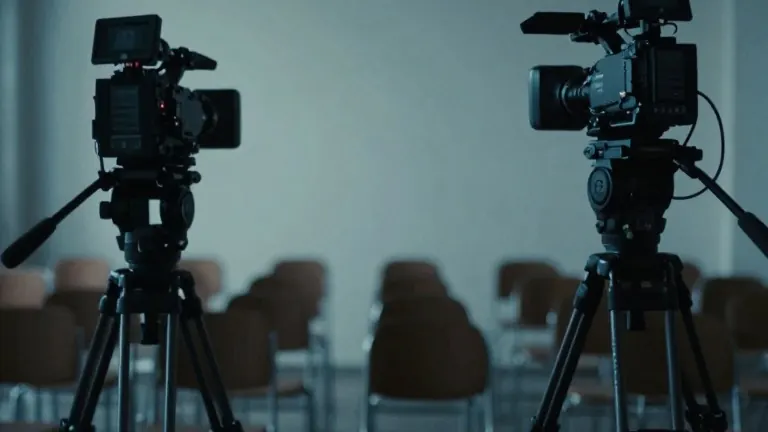
However, the production methods raise questions about what is real. The film used two camera setups to capture every reaction, which complicates the idea that the subjects were being unselfconscious. Holmes also initiated the project, and her team, including crisis PR specialist Risa Heller, worked to place a soft interview in The New York Times around the same time the film was being developed.
The skepticism extends to the creators themselves. Nathan Fielder is known for blending fiction and reality in his work. His HBO series The Rehearsal once convinced a child he was the boy's father. In this film, he challenges Holmes on details about the Theranos machine, such as whether she understood the classic comedy routine "Who's on First?". Critics argue that Fielder's history of fudging fiction makes it hard to trust his interactions with Holmes.
Amanda Seyfried also appears in the film, serving as the audience surrogate. She is a professional actress who has played historical figures like William Randolph Hearst and Jean Valjean. Despite her background in performance, viewers are asked to trust her reactions as genuine observations of reality.
Matt Pearce, a veteran journalist and commentator, noted the irony of the film's presentation. He wrote on Substack that Fielder says, "'I'm just trying to be accurate,' toward the end of his film, lying through his fucking teeth." This quote captures the tension between the filmmaker's stated intent and the methods used to get the story.
The film is part of a wider trend in the genre. Other documentaries released this season have also faced criticism for manipulating reality. Alex Gibney created a speaking avatar of Elon Musk in his film Musk, using the tech leader's own words. Ava DuVernay used AI to animate archival photos in The 14th. These choices highlight a growing unease about how technology and creative choices affect the perceived truth of non-fiction storytelling.
Sacha Baron Cohen's new film, Ali G: Who Iz I?, offers a different approach. It is largely scripted but may paint a truer picture because it does not hide behind the label of documentary. Cohen worked with Fielder on the 2018 series Who Is America?. That collaboration helped Fielder understand the power of pretending everything is real to uncover deeper truths.
The film opens on November 12, 2026. It asks viewers to consider how much they trust what they see on screen. In an era where objective facts are often contested, the line between a documentary and a performance is becoming harder to define.