Alaska native artist discusses how landscapes shape her work
Athena LaTocha spoke to over 50 attendees at Stony Brook University about using natural elements and historical sites in her art.
By Samuel Hayes ·
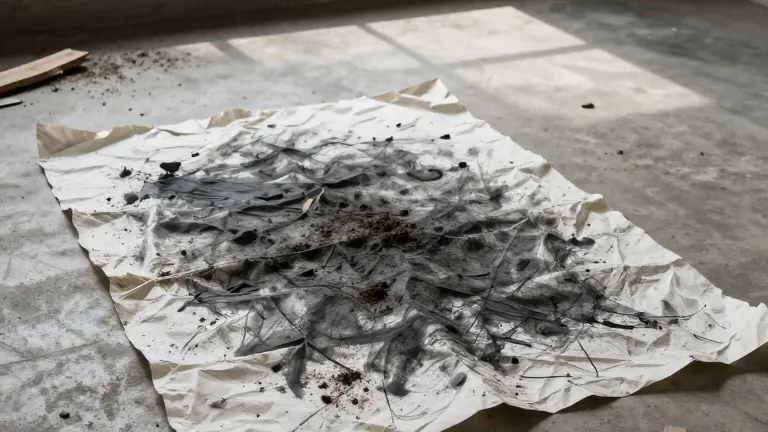
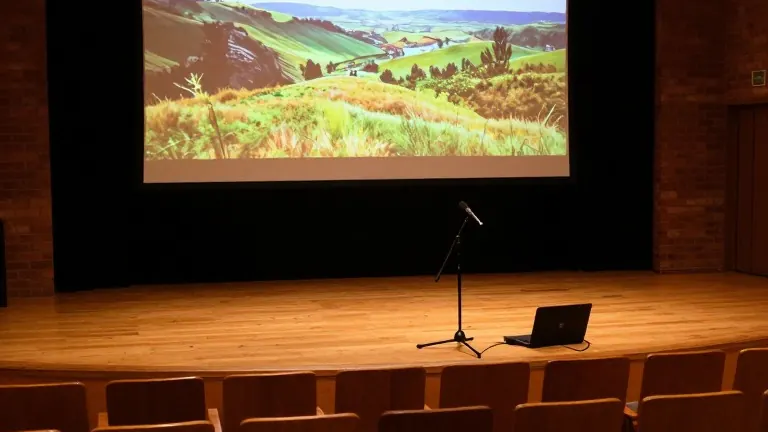
Athena LaTocha told a crowd at Stony Brook University on November 11 that her art process involves letting materials break down and settle. The artist, who received a Master of Fine Arts from the university in 2007, addressed more than 50 students, faculty, and community members at the Zuccaire Gallery. Joseph M. Pierce, a professor in the Department of Hispanic Languages and Literature, moderated the event held for Native American Heritage Month.
LaTocha described her method of working on the floor with ink, lead, and soil. She often uses unconventional tools to create large works on paper. Her practice relies on pushing materials until they deteriorate, then observing how the pieces reassemble.
The artist drew inspiration from her childhood in Alaska, where she studied glaciers and their impact on the land. She noted how ice carves valleys and moves sediment. This fascination with geological marks informed her later projects, including her time at Pea Ridge National Military Park in Arkansas. There, she studied the Ozark Mountains while standing on a Civil War battlefield that also served as a historic trail for forced Indigenous removal.
LaTocha recalled an elder guiding her along one of those trails. The person placed a hand on her shoulder to show the direction of travel. She said the memory influenced the development of her work. She also created an installation at Brooklyn’s Green-Wood Cemetery titled The Remains of Winter. That project incorporated damaged trees into the space, including one large tree that workers had to bind and carry through the chapel doorway. LaTocha described the effort as a procession.
The artist also examined ancient earthworks in Ohio where trees have grown through structures built more than 2,000 years ago. She discussed the tension between preserving monuments and allowing nature to change them. LaTocha credited several Stony Brook mentors who encouraged her to take risks and experiment with her medium.
Pierce asked how her relationship with materials had evolved. LaTocha compared the experience to falling in love. She said it is a progression that remains as mysterious as the emotional process. She added that the connection with materials and places becomes intimate. She said all the sites she has studied have become part of her.
Pierce also noted the growth of the Native American and Indigenous Studies Initiative at Stony Brook. Established in 2023, the initiative has hired seven faculty members. It now offers a minor in Native American and Indigenous Studies, the first of its kind on Long Island. The event was hosted by the Office of Diversity, Intercultural and Community Engagement, the Native American and Indigenous Studies department, and the Zuccaire Gallery.