Brazil Study Shows Wolbachia Mosquitoes Cut Dengue Infections by 68.5%
A four-year trial in Belo Horizonte found that releasing bacteria-carrying Aedes aegypti mosquitoes reduced dengue cases in children, offering a new tool as Florida battles its own outbreak.
By Samuel Hayes ·
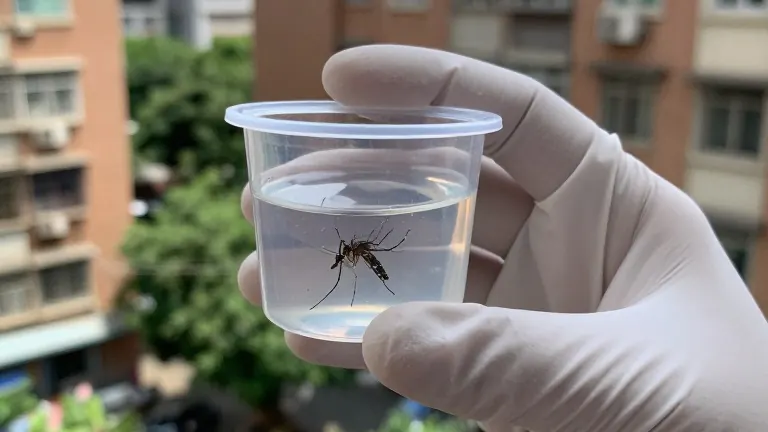
A four-year field study in Belo Horizonte, Brazil, reported that releasing mosquitoes infected with a harmless bacterium reduced dengue infections in children by 68.5 percent. The findings, presented at the American Society of Tropical Medicine and Hygiene conference in Maryland, suggest a scalable alternative to chemical insecticides for controlling mosquito-borne diseases in densely populated urban areas.
Researchers from Brazil’s Ministry of Health, Emory University, Yale University, and the US National Institute of Allergy and Infectious Diseases conducted the trial between 2020 and 2024. They introduced Aedes aegypti mosquitoes carrying Wolbachia, a naturally occurring bacterium absent in this species but present in about 50 percent of other insects. Wolbachia inhibits the replication of viruses like dengue, chikungunya, and Zika inside the mosquito, making the insects less likely to transmit disease to humans.
The study monitored 5,700 children at random in neighborhoods where the Wolbachia-carrying mosquitoes were released, comparing results against areas treated with standard insecticide measures. In the intervention zones, only 4 percent of routine blood tests returned positive for dengue, compared to 14 percent in control areas. Chikungunya cases dropped by 73.3 percent in the treated neighborhoods. The trial took place during Belo Horizonte’s worst dengue outbreak in years, a period when Brazil accounted for roughly one-tenth of global dengue cases.
David Hamer, a global health expert at Boston University who was not involved in the Brazilian research, described the results as "really exciting." He predicted that widespread use of Wolbachia mosquitoes could "knock dengue down to much lower levels" in many regions. The timing of the announcement coincides with a major dengue outbreak in Florida, which authorities believe is the most severe in the United States since the 1940s.
The World Mosquito Program pioneered the Wolbachia method in the mid-2000s, with prior interventions in Colombia’s Aburra Valley and the Brazilian city of Niteroi. In those areas, which together serve about 4.5 million people, dengue infections declined by 92 percent among the roughly one million individuals studied. The method is considered self-sustaining because the bacteria spread through mosquito reproduction, eliminating the need for repeated releases. Singapore has also adopted a related strategy since 2016, using Wolbachia-carrying males to suppress wild populations.
Other researchers have explored genetic modification of mosquitoes for different purposes. In 2024, Dutch scientists at Leiden University Medical Center and Radboud University tested a method to deliver malaria vaccines via mosquito bites. While 80 percent of the 20 participants developed immunity, the small sample size limited the generalizability of the findings. Similar trials in the US and Japan have targeted malaria and leishmaniasis, but the Wolbachia approach remains distinct for its focus on reducing viral transmission rather than killing the insects or delivering vaccines directly to humans.