Bedouin voters turn out in force after mass demolitions in Negev
Turnout among Arab residents hit 77%, helping Arab-led parties win a record 19 Knesset seats.
By Lauren Foster ·
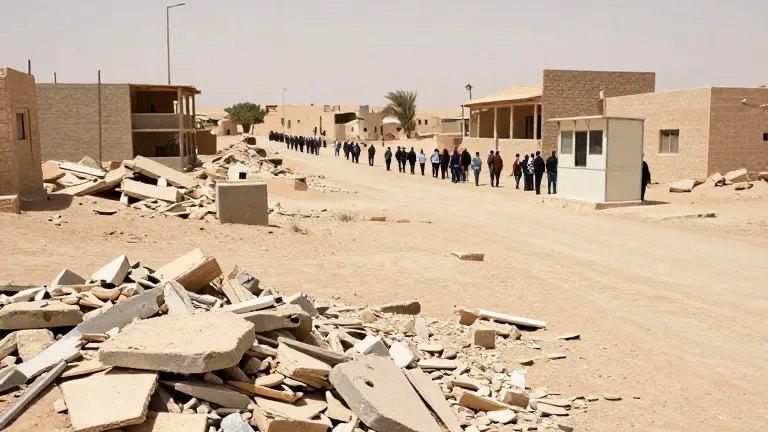
Israeli authorities recently demolished approximately 80 homes in the Bedouin community of Dahiyah in the Negev Desert. Residents of the area, which lies outside Rahat, the largest Bedouin city in the region, cast ballots in the general election on Oct. 27. This vote marked the first national election since the current government, described as the most right-wing in the country's history, was sworn in nearly four years ago.
Voter participation among the Palestinian Arab minority, which comprises more than 20% of Israel's total population, surged this year. The Israel Democracy Institute reported that 77% of eligible voters in Arab communities participated in the polls. Turnout among the roughly 300,000 Bedouin residents approached 80%. In previous elections, participation rates for this demographic were historically low.
This high turnout contributed to a record-breaking result for Arab-led parties. These parties secured 19 seats in the 120-member Knesset. The outcome weakened Prime Minister Benjamin Netanyahu's hold on power, as his party and far-right allies failed to secure a clear majority. Adnan Abu Wadi, a resident of Dahiyah who lost his home to the bulldozers, voted for Ra'am, a conservative Islamist party. He cited anger toward the government and National Security Minister Itamar Ben-Gvir as primary factors in his decision.
Ben-Gvir intensified demolitions of Bedouin communities shortly after his appointment. Activists have accused the government of using zoning laws to displace communities and consolidate land control. On election night, voters in Rahat celebrated the apparent poor performance of Ben-Gvir's party, which is part of the pro-Netanyahu bloc. Residents chanted for Ben-Gvir to leave, reflecting the sentiment of many who view the minister as a key driver of the demolitions.
Netanyahu addressed the high Arab turnout during the day, warning his supporters of the participation levels. Since the vote, he has claimed without evidence that Arab-led parties stole the election by using foreign funds to bribe voters. Israeli President Isaac Herzog must now select a leader among the main parties to form a governing coalition. He announced he would make that decision on Sunday.
Abu Wadi, now living near the ruins of his former village, expressed confidence that a new government would remove Ben-Gvir from his position. He stated that the minister sought destruction rather than a solution. The election result stands as a direct response from a community that saw its homes destroyed weeks before the vote.