Ukraine Reports 15 Drone Experts in Mali Conflict
A CNN investigation claims Ukrainian specialists are training Tuareg rebels against Russian forces, though Kyiv has not officially confirmed the deployment.
By Samuel Hayes ·
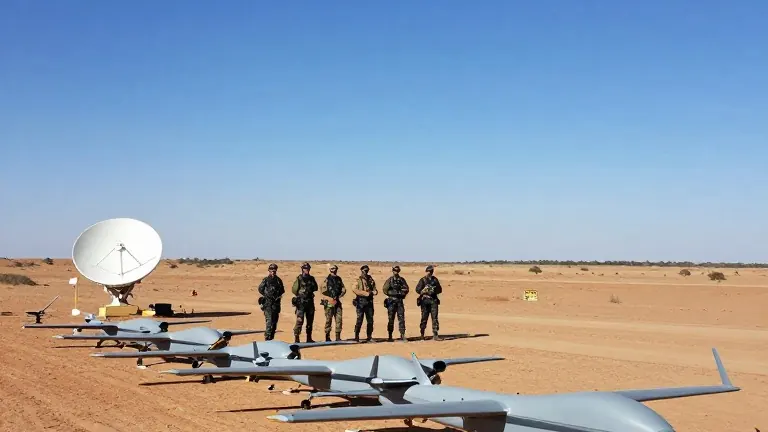
A new investigation by CNN reports that approximately 15 Ukrainian drone specialists are currently operating in northern Mali to assist Tuareg rebels. The team is alleged to be providing training, operational planning, and remote support for drone missions against the military government in Bamako and its Russian allies.
The report was published in September 2026. It suggests that the war between Russia and Ukraine is extending into Africa’s Sahel region. The common enemy for the Tuareg forces and the Ukrainian experts is the Malian military government, which has deepened its ties with Moscow.
Kyrylo Budanov, the former head of Ukraine’s military intelligence service who now serves as chief of staff to President Volodymyr Zelenskyy, hinted at these operations. On September 7, he posted on X that Ukrainian intelligence protects the country’s interests worldwide, from Russia to Africa. He described these areas as burning desert sands and icy snows, though he did not name Mali specifically.
Marta Oliynyk-D'omochko, a coordinator for the African Studies Program at the National University of Kyiv-Mohyla Academy, says the move is strategic. She told DW that Ukraine’s main interest is to weaken Russia’s global influence. If Russian military power is rolled back in the region, the economic opportunities tied to that influence will also decrease.
Irina Filatova, a professor emeritus at the University of KwaZulu-Natal, finds the support plausible but notes she lacks independent evidence. She argues that Ukrainians view Russian troops anywhere in the world as legitimate targets. Setbacks in Mali could tie up Russian resources and damage Moscow’s reputation as a security partner.
The political risk for Kyiv lies in its partner. The Azawad Liberation Front, or FLA, cooperates with Jama'at Nusrat al-Islam wal Muslimeen, a jihadist group linked to al-Qaeda. Oliynyk-D'omochko describes the relationship as a tactical arrangement against a common enemy rather than a comprehensive alliance. The FLA seeks self-determination in northern Mali, not the removal of the Bamako government.
Mali, Niger, and Burkina Faso have severed diplomatic relations with Ukraine. In September, Mali’s Foreign Minister Abdoulaye Diop accused Kyiv at the United Nations of providing clear and open support to terrorist groups. He claimed this undermined the country’s territorial integrity but did not provide specific evidence for the assertion.
The connection between Tuareg and Islamist groups dates back to 2011. After the ousting of Muammar al-Gaddafi in Libya, armed Tuareg fighters returned to Mali. Their separatist ambitions became intertwined with Islamist movements. Iyad Ag Ghaly, the current leader of the jihadist group, was involved in the Tuareg rebellion before turning to jihadism.
Ukraine’s military intelligence service, the HUR, did not immediately confirm the deployment. A spokesperson said the agency might provide information later. The HUR was asked if political leadership approved the mission and how it ensures the jihadist group does not benefit from Ukrainian support.
The Wagner Group, which previously operated in Mali, was replaced by the Africa Corps in 2025. Ulf Laessing, a former head of the Sahel program at the Konrad Adenauer Foundation, says the Africa Corps still uses Syria and Libya as transit points for flights to support operations on the continent. The extent of Ukrainian involvement in Mali remains unclear as of this week.
Source: Deutsche Welle