Supreme Court to Weigh Seizure of Pilot's Plane Over 72 Cans of Beer
Justices will hear arguments in the case of Ken Jouppi, who seeks return of his Cessna after a 2012 conviction for transporting alcohol into a dry Alaskan village.
By Fatima Saleh ·
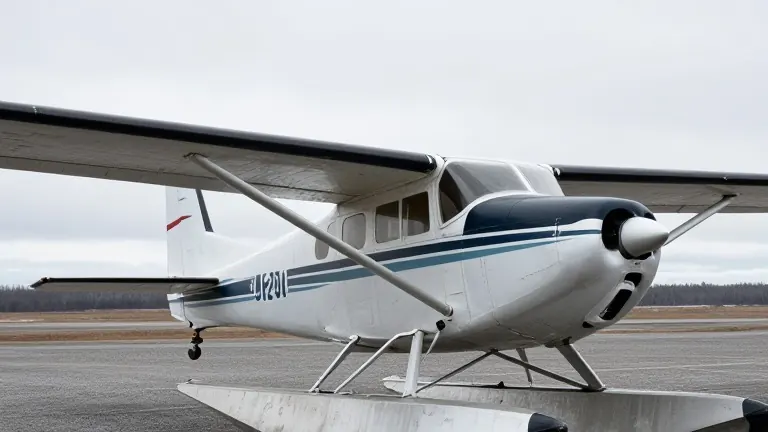
The United States Supreme Court will hear oral arguments on December 1 regarding the constitutional validity of Alaska’s seizure of a seaplane in a misdemeanor case. The dispute centers on whether the state’s forfeiture of pilot Ken Jouppi’s 1969 Cessna U206D violated the Excessive Fines Clause of the Eighth Amendment.
Jouppi, 83, lost possession of the aircraft after a jury found him guilty of knowingly transporting alcoholic beverages into Beaver, a remote Alaskan village of approximately 50 residents that bans the sale and possession of alcohol. State troopers executed a search warrant at Fairbanks in April 2012 and discovered three cases of Budweiser beer in the luggage of a passenger. Officers identified 72 cans, totaling about 9 gallons, with at least one six-pack visible in a plastic grocery bag.
A lower court valued the plane at $95,000, though Jouppi currently estimates its worth at $150,000. The aircraft has remained in a storage lot in Fairbanks during the litigation, with Jouppi covering the associated fees. He argued that the forfeiture was a grossly disproportionate punishment for a minor offense. Sam Gedge, a lawyer with the Institute for Justice, represented Jouppi in the appeal. Gedge stated that governments frequently magnify small offenses to impose large fines and increase budget revenues.
Alaska maintained that it has the authority to mandate the forfeiture of vehicles used in known crimes. The state’s Office of the Attorney General asserted in a statement that its position is supported by the law and the record. The Alaska Supreme Court upheld the seizure in 2025, ruling that the importation of even a single six-pack causes grave societal harm due to the high costs of alcohol abuse in rural areas. The court rejected the argument that the penalty was excessive based on the specific facts of Jouppi’s conduct.
The Justice Department filed a brief supporting Alaska, noting that the forfeiture in this case is more moderate than many historically permitted. The department argued that a vehicle used to illegally transport alcohol is subject to forfeiture regardless of its type or value. Jouppi contended that the state applied a flawed legal framework that focused on the theoretical worst-case offender rather than his actual behavior. His lawyers wrote that the error resulted in an airplane being forfeited for a six-pack.
Jouppi retired and moved to Idaho following his four years of service as a B-52 mechanic in the U.S. Air Force and his move to Alaska in the late 1970s. He operated KenAir, a one-man air taxi service that transported cargo and passengers to remote communities. A judge initially blocked the forfeiture in 2013, allowing Jouppi to regain possession, but the state continued its legal efforts to seize the plane again. The case now rests with the nine Supreme Court justices.
Devi Rao, a lawyer at the MacArthur Justice Center, observed that the facts of the case are sympathetic and suggested the grant of certiorari indicates the court may perceive an error in the Alaska system. The US Chamber of Commerce also filed a brief arguing that the lower court’s interpretation weakens protections in civil penalty cases. Jouppi remains in Idaho while awaiting the court’s decision. He said that a victory would be tremendous and beneficial for the country.