Hegseth praises alliance with Colombia as AC3 summit host confirmed
The US Secretary of Defense emphasized strong bilateral cooperation during a trip to Bogota, where Colombia was named the host for the upcoming Americas Counter Cartel Coalition meeting.
By News Media House Staff ·
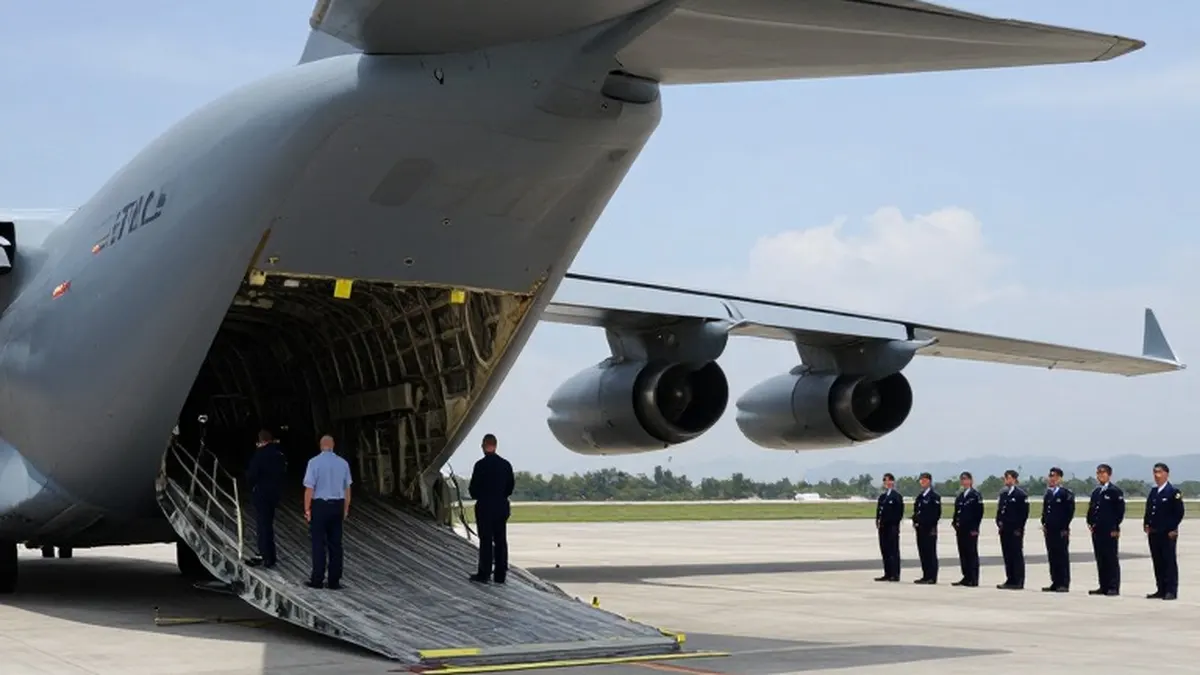
United States Secretary of Defense Pete Hegseth arrived in Bogota on Wednesday to reinforce the growing military partnership between Washington and the Colombian government. During a brief visit to the capital, Hegseth highlighted the close alignment between the two administrations, describing their leaders as strong and clear in their objectives. The visit served as a key moment for discussing regional security strategies, particularly regarding the fight against organized crime and drug trafficking.
Hegseth landed at an Air Force base in Bogota around 1 pm local time on Wednesday. He subsequently held closed-door discussions with Colombian Defence Minister Jorge Mora and the General Commander of the Armed Forces, Erik Rodriguez. These meetings focused on the operational challenges of combating armed groups within Colombia, with specific attention given to the volatile border region with Venezuela. The military leaders also addressed the increasing threat posed by the use of advanced drones by these non-state actors.
President Abelardo de la Espriella, a political outsider who won the election on a platform of using military force to dismantle cartels, relies heavily on American support to fulfill his mandate. Sergio Guzman, director of the political risk consultancy Colombia Risk Analysis, noted that Colombia's fiscal constraints necessitate significant external assistance. Although the visit did not result in new funding commitments, the US formally delivered a Lockheed C-130 Hercules aircraft to the Colombian Air Force. This transport plane is designed to carry troops and cargo, marking a tangible step in the enhanced cooperation between the two nations.
A major announcement from the visit confirmed that Colombia will host next year's meeting of the Americas Counter Cartel Coalition, also known as the Shield of the Americas. Launched in March, this alliance brings together US-aligned nations in Latin America and the Caribbean to combat organized crime through a military-centric approach. Colombia joined the coalition recently when de la Espriella took power in August, succeeding the leftist President Gustavo Petro, who had frequently clashed with the White House.
The Trump administration has been urging coalition members to permit US strikes on their territories as it seeks to expand its bombing campaign against suspected drug vessels in the Caribbean and Eastern Pacific. While Hegseth previously announced at a summit in Panama that de la Espriella had authorized joint military operations, recent reporting by The New York Times suggested the Colombian president had since rejected the idea of direct US intervention. The report also claimed that Hegseth shortened his stay in Colombia due to this rejection of a bilateral military agreement.
Both Hegseth and de la Espriella characterized the New York Times report as false, emphasizing that close collaboration continues between their militaries. However, de la Espriella acknowledged that any such move would require congressional approval, a process that could be difficult given the current state of public opinion in Colombia. Guzman suggested that Colombia's rejection of direct US strikes likely represents a setback for the White House's broader strategy. He described Colombia as the keystone of the regional approach, implying that its hesitation is a significant disappointment for the administration.
Beyond his activities in Colombia, Hegseth also traveled to Venezuela on Wednesday, where he signed a bilateral deal pledging US military support for Caracas. Following his departure from Colombia, the Secretary of Defense is scheduled to make a brief stop in Ecuador before concluding his regional tour in Honduras. This itinerary underscores the US effort to consolidate its military presence and diplomatic influence across the region during this period of heightened activity.
Originally published by News Media House