Oklahoma Rep. Gann proposes ban on automated government surveillance
The new legislation would restrict the use of license plate readers and other tracking devices by public entities, carrying felony penalties for violations.
By Samuel Hayes ·
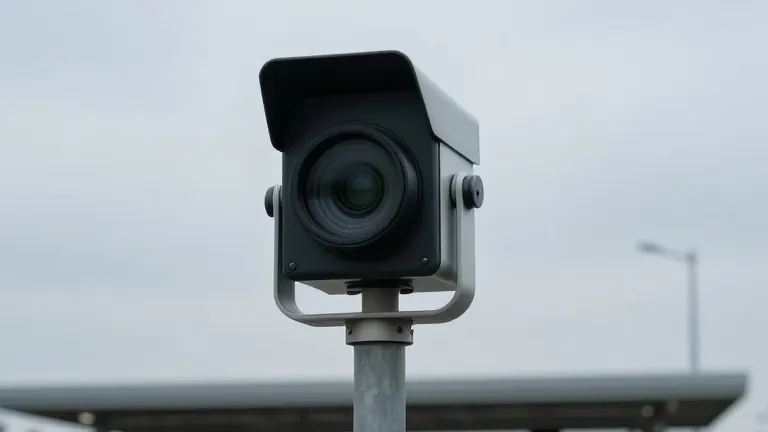
House Bill 1001, filed by Rep. Gann, would prohibit most public entities in Oklahoma from using automated surveillance systems without specific judicial authorization.
The measure, formally named the Oklahoma Freedom of Movement and Government Surveillance Prohibition Act, targets devices that automatically track and store personal data without the subject's knowledge or consent. This includes Automated License Plate Reader systems, commonly known as Flock cameras.
Violations of the bill would constitute state felonies. Officials found in breach could face up to five years in prison and a fine of $50,000 per violation, excluding court fees. Only two exceptions exist: the Oklahoma Turnpike Authority may use plate readers for toll collection, and law enforcement may use the technology with a judge-issued Particularized Warrant. These warrants require stricter probable cause standards than standard warrants.
Gann argued the bill protects the Fourth Amendment rights of all state residents against unwarranted searches and seizures. "Being tracked by your government should be a concern to everybody," Gann said. He noted that the technology advances rapidly, making a broad legislative response necessary.
The representative believes the bill will attract bipartisan support because constitutional protections apply to all voters regardless of party affiliation. He described it as the most important issue in his district, outside of the local smelter. "I believe that is going to gain a lot of bipartisan support, because the Fourth Amendment applies to us, whether we're Democrat or Republican or independent," Gann said.
Florida enacted a similar ban earlier in 2026, while Ohio has a pending proposal. Gann considers his version among the most comprehensive in the nation. Jon Echols, the state attorney general-elect who would enforce the law, said it is too early to comment on the former colleague's measure. Gann also filed House Resolution 1001, which seeks to decentralize legislative power away from the House Speaker and Floor Leader, a concept he previously proposed for the 2025 session.
Other early 2027 proposals include Senate Bill 1 by Sen. Julie Daniels, R-Bartlesville, which limits when licensed marijuana patients can carry firearms. Senate Bill 2 by Sen. Kristen Thompson, R-Edmond, would ban specific additives and dyes from lunches served in public schools and juvenile detention centers.