Myanmar rejects UN genocide ruling as refugees demand enforcement and action
Myanmar's government labeled a landmark UN court finding of genocide against the Rohingya as unfair, while displaced communities in Bangladesh called for stronger international measures to secure their future.
By News Media House Staff ·
Myanmar's government rejected the United Nations' top court ruling on Friday, describing the landmark decision as unfair. The International Court of Justice had found on Thursday that the country committed genocide against its Rohingya minority. While the ruling has renewed global attention on the fate of the persecuted group, Myanmar officials insisted that the verdict was not unanimous and that the nation had worked hard to meet its international obligations.
Khine Khine Soe, a spokeswoman for President Min Aung Hlaing, highlighted that the decision was reached by a nine to six vote among the judges. Speaking to reporters in the capital Naypyitaw, she noted that not all 15 judges agreed with the outcome. She argued that because the decision was not unanimous, it could be considered unfair. The spokesperson added that the government had made every effort to address the questions raised in court and fulfill its duties according to international standards.
The current president, Min Aung Hlaing, was the military commander in charge of the 2017 operation in northern Rakhine state. That campaign triggered accusations of mass killings, rapes, and the burning of thousands of homes by security forces. Myanmar has consistently denied committing genocide, maintaining that its actions were directed against insurgents rather than the civilian population.
The court's judgment stated that evidence showed Myanmar forces killed approximately 10,000 Rohingya. To establish that genocide occurred under the 1948 convention, the court determined there was an intent to destroy the group in whole or in part. The judges ordered the military-supported government to allow the Rohingya to return home safely, pay reparations to Muslim victims, and prosecute those suspected of committing the crime.
When asked about these specific demands, the government spokeswoman did not provide an immediate response. She explained that the court's decision and the accompanying opinions span more than 300 pages. She stated that the legal documents require careful study and that the government needs time to assess the implications before taking further steps.
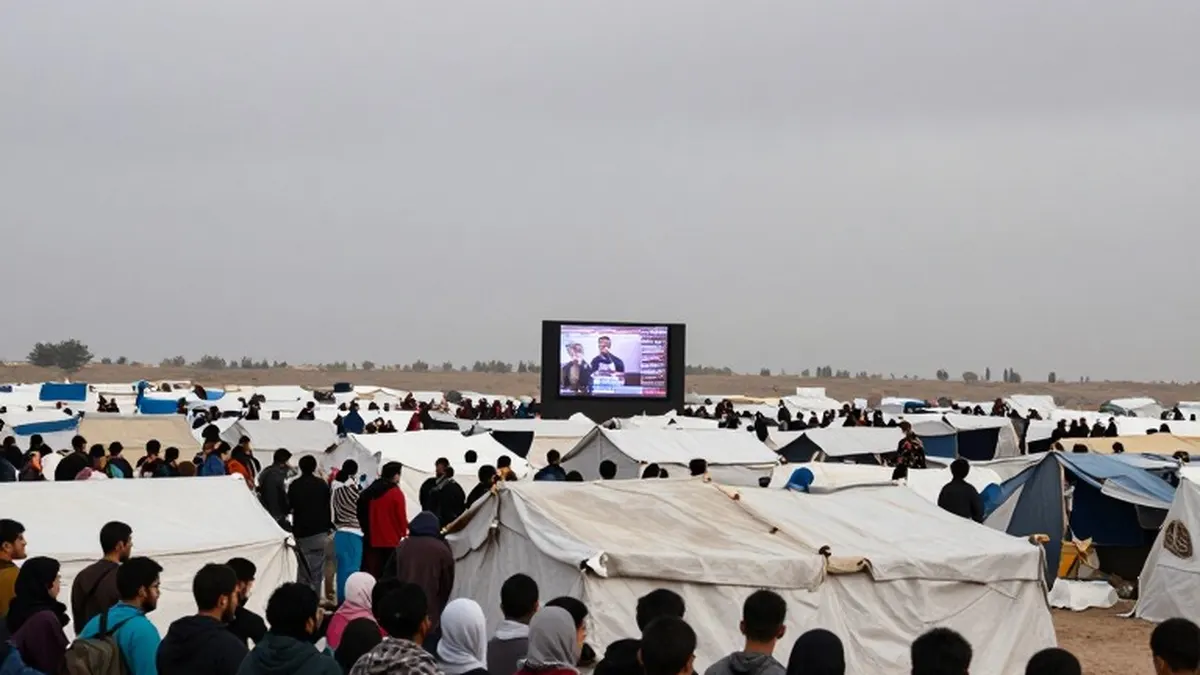
In Cox’s Bazar, Bangladesh, hundreds of refugees gathered in front of a large screen to watch the news of the verdict. For many in the sprawling camps, the historic decision offered a small victory and a glimmer of hope for a safe return to their homes. However, community leaders emphasized that the ruling is not the end of their struggle. Mohammad Rofik, a community leader, described the verdict as a victory that recognizes their suffering, but he noted that justice has only just begun and there is still a long way to go.
Sayed Ullah, another community leader, viewed the ruling as a historic recognition of the Rohingya as a distinct ethnic group. He pointed out that Myanmar has often denied the existence of the Rohingya, but the court has made clear that they possess their own culture, language, and land. Other refugees reacted more sharply, urging the international community to impose severe punishment on Myanmar authorities based on the established fact of genocide.
The implementation of the ruling remains a challenge. While the court's decisions are final and legally binding, the institution lacks direct enforcement power beyond reporting noncompliance to the UN Security Council. The Rohingya, who number about 1.2 million in Bangladesh, continue to live in crowded camps in Cox’s Bazar. These camps are marked by harsh conditions, including fire hazards, infectious diseases, monsoon landslides, and inadequate sanitation.
Amid the regional crisis, Malaysia announced on Friday that it is seeking to resettle 10,000 Rohingya refugees in Turkey. Deputy Prime Minister Ahmad Zahid Hamidi revealed that the cabinet agreed to this proposal following his recent visit to Turkey. The plan involves a structured skills training program that will last three to six months, focusing on practical skills demanded by Turkish employers. This move comes as Malaysia works to address its own refugee population, which includes about 190,000 Myanmar nationals and asylum seekers, two-thirds of whom are Rohingya.
Originally published by News Media House