Local Chef Adapts Three Ligurian Dishes for Home Kitchens
A food writer shares recipes for roasted peppers, mushroom pasta, and oven-roasted fish inspired by a recent trip to Italy.
By Fatima Saleh ·
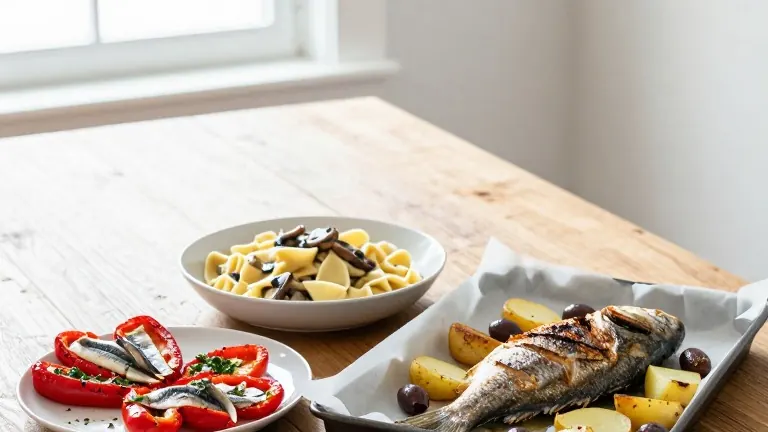
A food writer has shared three recipes adapted from a recent trip to Italy, aiming to replicate the simple, ingredient-focused meals encountered in Liguria. The dishes, published this week, focus on roasted peppers, mushroom pasta, and whole fish cooked with potatoes and briny accompaniments. The author teaches a Food and Memoir Writing class with partner Domenica Marchetti and spent the previous month in the town of Alassio, located between Genoa and Nice.
The first recipe features roasted sweet peppers served with anchovies, olive oil, herbs, and goat cheese. The dish was originally served at Osteria i Matetti during a Sunday lunch in Alassio. The author describes the original presentation as silky soft pepper wedges topped with a fat anchovy and green olive oil, accompanied by a mound of soft goat cheese. For home preparation, the recipe calls for roasting large red or yellow peppers until blackened, peeling the skin, and arranging the wedges on a plate. Each wedge is topped with an anchovy filet, drizzled with oil, and seasoned with fresh herbs and red pepper flakes. A 3-ounce log of soft goat cheese is served on the side. The recipe serves four people.
The second dish is a pasta with mushrooms, inspired by a meal at a lakeside restaurant on Lake Garda. The original course featured homemade tagliatelle with foraged funghi porcini mushrooms. The author notes that the chef sautéed the wild mushrooms in garlic and local olive oil, allowing the ingredients to dominate the flavor profile. The home version uses a combination of dried porcini, portobello, and shiitake mushrooms to mimic the earthy taste. The dried porcini are soaked in hot water for 15 minutes, while the fresh mushrooms are sautéed with garlic and olive oil. The mushrooms are simmered with cream for eight minutes before being combined with boiled tagliatelle, pappardelle, fettuccine, or thick spaghetti. The dish is garnished with parsley and Parmesan cheese. It serves two to three people.
The third recipe is for a roasted whole fish with potatoes, capers, anchovies, and olives. The author based this on a branzino dish served at the same Lake Garda restaurant. The fish was originally roasted on a baking sheet with paper-thin potatoes, capers, anchovies, black olives, and cherry tomatoes. The home version instructs cooks to use a 1 to 1.5 pound whole fish, such as trout, bluefish, flounder, or snapper. The fish is placed on a parchment-lined sheet pan, seasoned with lemon slices, salt, and pepper. It is surrounded by thinly sliced potatoes and scattered with tomatoes, chopped anchovies, capers, and olives. The dish is roasted at 450 degrees for 25 minutes, then broiled for 5 to 6 minutes until the potatoes are tender and the fish reaches an internal temperature of 145 degrees.
The author notes that anchovies can be omitted in the pepper and fish recipes if desired. In the pepper dish, the goat cheese can be used to stuff the peppers instead. In the fish dish, the capers and olives should be doubled if anchovies are left out. The recipes emphasize high oven heat to crisp the edges of the potatoes and the briny flavor of the cured fish to complement the mild white meat.
The author teaches the Food and Memoir Writing class in Alassio, a small town on the Ligurian coast. The region is known for its respect for local ingredients and traditional home cooking. The author states that the meals encountered during the trip were rarely fussy or loaded with sauces. Instead, they were based on centuries of tradition and the availability of local produce and seafood from the Ligurian sea.
The recipes were originally published by WBUR.org and are now available for readers to try. The author encourages cooks to use local seasonal ingredients where possible, such as wild mushrooms in autumn or local white fish for the roasted dish.