Historian details the diagnostic methods of Joseph Bell in new biography
Lindsey Fitzharris’s book, Sleuth-Hound, examines the Edinburgh surgeon who inspired Sherlock Holmes and used observation to solve medical and criminal mysteries.
By Fatima Saleh ·
Sir Arthur Conan Doyle’s fictional detective Sherlock Holmes has dominated popular culture for more than a century, but the real man who inspired the character was a surgeon in Edinburgh. Joseph Bell, a renowned professor at the University of Edinburgh, taught Doyle when the author was a young medical student. A new biography by medical historian Lindsey Fitzharris, titled Sleuth-Hound: The Case of the Real Sherlock Holmes, explores Bell’s life and work.
Fitzharris, who previously wrote about surgical pioneer Joseph Lister and WWI plastic surgeon Harold Gillies, returns to the Scottish medical scene in this new book. She describes Bell as a medical detective who used observation to diagnose patients. Bell could identify a person’s occupation, habits, and ailments by simply looking at them. His methods were so precise that they directly influenced Doyle’s writing.
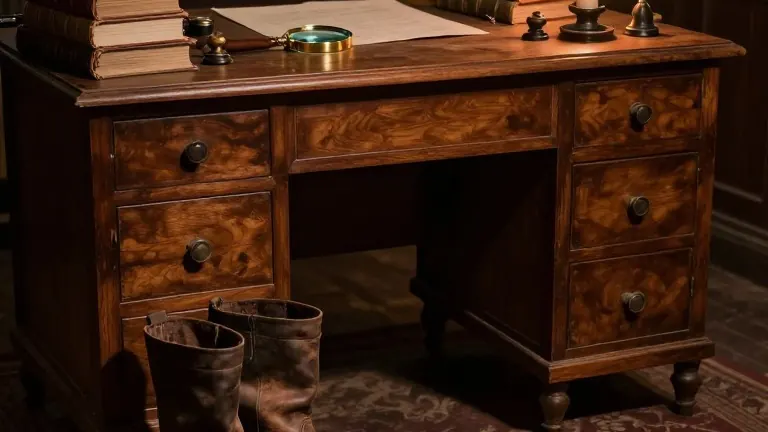
One specific incident in Bell’s career found its way into the fiction. Bell once determined the route a patient had taken to the infirmary by analyzing the type of clay on the patient’s boots. Doyle later used this detail in the novel The Sign of the Four. Bell also worked with a local police surgeon on prominent murder cases of his era, further blurring the line between medicine and detective work.
Fitzharris approached the project with a focus on medical history rather than just literary trivia. She noted that while a 1982 book by Ely Liebow covered Bell, it was not a major commercial title. She wanted to apply a medical historian’s perspective to the subject. Her previous work includes a 2020 Smithsonian Channel documentary and a 2025 children’s book about medical failures co-authored with her husband, caricaturist Adrian Teal.
The book places Bell in the context of the Edinburgh of the body snatchers and the early use of ether. It details how his unusual diagnostic style set him apart from his colleagues. By connecting his clinical observations to the creation of one of literature’s most famous characters, the biography offers a look at the intersection of science and storytelling in Victorian Scotland.
Source: Ars Technica