Columbus to spend $250 million on 150 miles of new trails
A new tax levy approved in 2024 funds the LinkUS initiative, which aims to build walking and biking paths by 2030.
By Samuel Hayes ·
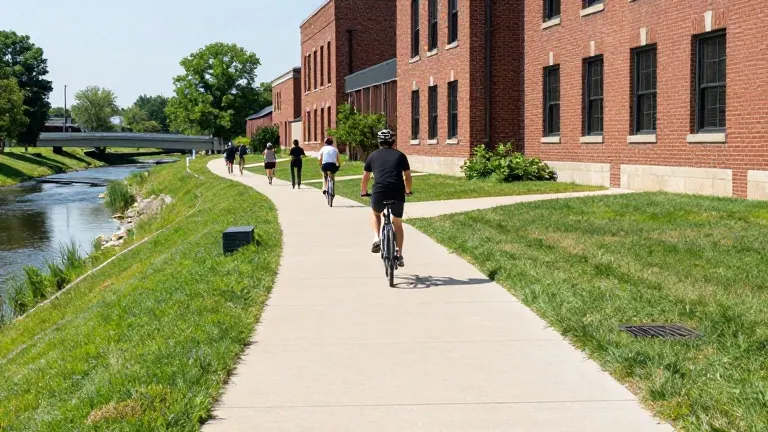
Columbus, Ohio, will spend $250 million over the next five years to construct 150 miles of new bikeways, walkways, and trails. The city launched this effort following the approval of a local sales tax levy in November 2024. The measure, known as Issue 47, funds the LinkUS mobility initiative.
The initiative directs 27.5% of new COTA sales tax revenue toward transit-supportive infrastructure. This allocation amounts to roughly $50 million annually. The funds are restricted to the construction of new trails, sidewalks, and bikeways. The initial five-year phase targets 150 miles of new paths by 2030. The permanent levy is designed to create more than 500 miles of paths across the region by 2050.
City officials cite the levy as a strategic choice for urban development. Brian Ashworth, the city’s Transportation Planning Manager, stated that the project will benefit 2.1 million people living within a mile of bus service. His department is developing new bus routes equipped with bike racks to connect to the new trails. Ashworth noted that the city’s Bike Plus Plan provides for 500 miles of bikeways.
The city has previously made similar infrastructure changes. Fifteen years ago, local leaders removed dams on the Scioto River to create the Scioto Riverfront park. They also converted a lane on Broad Street, a seven-lane roadway, into a protected bike lane. Kelly Scocco, Director of the Department of Public Service, reported that this change reduced excessive speeding by 90% and cut crashes by 50%. Drivers had been traveling at 55 mph in a 35 mph zone before the lane conversion.
The new trails will connect to the Ohio to Erie Trail, a 326-mile route stretching from Cincinnati to Cleveland. This trail is part of the Great American Rail-Trail, a network that will eventually span 3,700 miles from Washington, D.C., to Washington state. Columbus serves as the largest city on this route. The city has established a Trail Towns program to support smaller communities along the path. Five towns have joined the program so far, while 20 others are waiting.
William Murdock, Executive Director of the Mid-Ohio Regional Planning Commission, said the plan uses the rail trail as a backbone to connect downtown and neighborhoods. He stated that the city has plans for 81 projects in the first five years. Murdock noted that the funding allows for progress that would take 30 years in other locations. The city is forecast to grow by one million people by 2030, making it the 14th largest city in the country.
Melinda Vonstein, Greenways Planning Studio Lead for the Mid-Ohio Regional Planning Commission, said the city is countering the trend of population loss in the Midwest. She noted that green mobility acts as a talent magnet for residents who do not want to own cars. Vonstein added that property values increase and local retail sales grow as foot and bike traffic rises. The city’s approach prioritizes safe multi-use trails and greenspace over commercial development in key areas.
The new infrastructure includes connectors that link the main trails to town centers and museums. The goal is to create urban trails that pass landmarks such as the Conservatory. City leaders aim to revitalize downtown areas by improving scenery and connections. The LinkUS initiative is described by officials as a model for other regions seeking to balance growth with sustainable transportation.