Breaking: Wall Street crash: Dow drops 1,800 points as AI fears hit local investors
A violent reversal of Wednesday's gains saw the S&P 500 record its worst day since April 2025, wiping out $2.5 trillion in tech value.
By Fatima Saleh ·
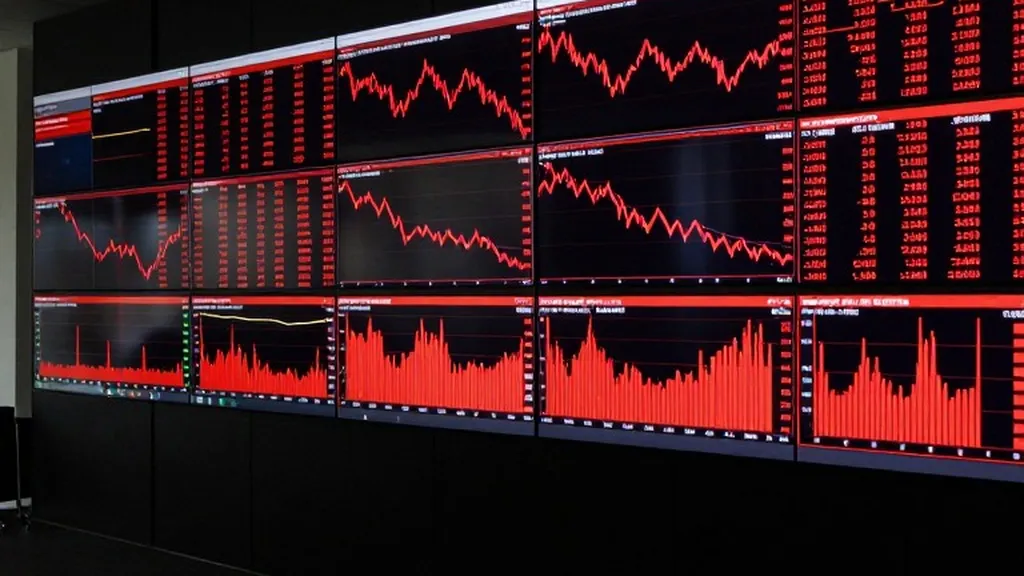
The stock market suffered its most dramatic collapse in years on Thursday, with the Dow Jones Industrial Average shedding more than 1,800 points to close at 51,868. This steep decline of 3.4 percent completely erased the gains made on Wednesday, marking a sharp reversal for investors who had celebrated a record high just one day earlier. The index of 30 large US companies fell to its lowest level in months, signaling a sudden loss of confidence in the broader economy. For many North Carolinians, this is not just a number on a screen. It is a direct hit to the value of retirement accounts, savings plans, and small investment portfolios that have grown over decades of steady market performance.
The selling pressure was not limited to the Dow. The S&P 500 fell 4.3 percent, marking its worst single day since April 2025, when President Trump announced sweeping global tariffs. The selling spread through every sector of the index and gathered pace as the day progressed. This broad-based decline means that the pain is not confined to a single industry. When the S&P 500 drops this sharply, it affects the mutual funds and exchange-traded funds that most Americans use to save for retirement. The sudden drop can make it difficult for investors to determine if they should hold their positions or sell to protect their capital, a decision that often leads to emotional stress for household budgets.
The technology sector bore the brunt of the crash, with the Nasdaq Composite plunging 5.5 percent. This move pushed the index into correction territory, defined as a fall of at least 10 percent from its recent high. The Nasdaq is now more than 11 percent below the record it set last month. An estimated $2.5 trillion in market value was wiped from the Nasdaq Composite. This massive loss of value represents a significant reduction in the net worth of millions of Americans. For those who have invested in tech stocks as a primary growth strategy, this day represents a tangible loss of wealth that may take months or years to recover.
The decline was particularly severe for the so-called Magnificent Seven technology companies, which include Apple, Nvidia, and Tesla. These stocks shed about $1 trillion in value in the single trading day. Nvidia, the biggest faller in the Dow, dropped 9.2 percent, losing more than $400 billion in market value. The Philadelphia Semiconductor Index, which tracks 30 of the largest chip companies, fell more than 12 percent. This index has now fallen more than 30 percent since the beginning of October and is almost 40 percent below its peak in June. The intensity of the selling in these key sectors highlights the specific risk associated with the current market environment, where high expectations for artificial intelligence have driven prices to levels that some analysts now question.
The catalyst for this crash was the Democrats' sweep of the House and Senate in Tuesday's midterm elections. Democrats campaigned on slowing the spread of data centers and AI, and voters rejected data center development in a series of local ballots. In Texas, Democrat Gina Hinojosa won the race for governor after campaigning on an immediate moratorium on new data center construction. Investors are now weighing whether tighter state-level restrictions could slow data center construction, which would pressure companies tied to the artificial intelligence trade. This political shift has created uncertainty about the future of the AI buildout, leading to a rapid revaluation of stocks that had been priced for continued, unrestricted growth.
The reversal of Wednesday's rally was particularly jarring for market participants. On Wednesday, the Dow had posted its biggest gain of the year as investors anticipated that the Democrats' success could restrain the White House. President Trump wrote on Truth Social that day, stating that the stock market had hit another record high and that 401(k)s were through the roof. This optimism was short-lived. The shift from record highs to a major correction in a single day illustrates the volatility of modern markets. For local investors in Greensboro and across North Carolina, this rapid change can be disorienting, as the value of their assets can swing significantly in a matter of days based on political events and market sentiment.
Market fear was evident in the behavior of the Cboe Volatility Index, or VIX. The index jumped as much as 5.7 points to above 28, its highest reading since March 31, 2026. The VIX was up 61 percent on the day, reflecting a surge in demand for protection against further market declines. By midday, nearly 800,000 VIX call options had traded, 3.5 times the 30-day average. This spike in volatility indicates that traders are bracing for further turbulence. For individual investors, high volatility often means wider price swings, making it harder to time the market and increasing the risk of short-term losses in their portfolios.
Analysts offered mixed perspectives on the long-term implications of the crash. Neil Wilson, an investor strategist at Saxo UK, described the event as a complete capitulation-level event in tech stocks. He warned that the fear is a total momentum unwind as Democrats pace the frontier and kibosh datacenter buildout. Dan Ives, a tech analyst, stated that there is no way to sugarcoat the fact that Democrats taking control, especially over the Senate, will create major hurdles for AI and tech legislation. These comments suggest that the current decline may be the beginning of a longer period of adjustment for the tech sector. Investors are being advised to look for stability before making major moves, as the market seeks a new equilibrium in the post-election landscape.
More Business · Scam Watch · Report a business · Got a Story?