Anthropic IPO Triggered Market Dip, Moody's Economist Says
High valuations, rising interest rates, and the largest initial public offering in history combined to push tech stocks down this week.
By Samuel Hayes ·
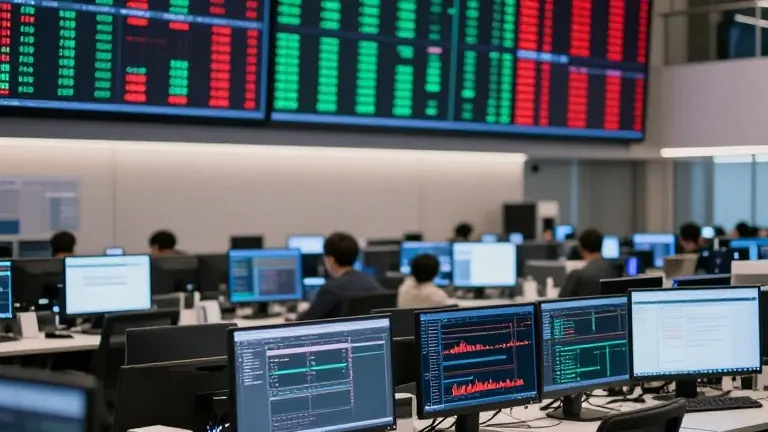
The initial public offering of Anthropic, the largest in history, contributed to a recent decline in technology stock prices, according to Mark Zandi, chief economist for Moody's Analytics. Zandi said the IPO raised over one hundred billion dollars, a sum that created liquidity challenges for investors who had to sell other artificial intelligence shares to secure cash for the new purchase.
He identified high valuations as the primary driver of the market movement. Investors had placed heavy expectations on AI companies, and a slight reduction in those expectations led to lower stock prices. Zandi noted that the Federal Reserve, specifically citing remarks from Austan Goolsbee of the Chicago Fed, appears prepared to raise interest rates to combat inflation. Higher rates make it more difficult to sustain high stock valuations.
Political factors also played a part in investor hesitation. Zandi pointed to the recent midterm elections, where candidates ran on platforms opposed to new data center development. That political signal made investors nervous about the regulatory environment for AI infrastructure.
Despite the volatility, Zandi described the current drop as a standard market correction of approximately 10 percent from its peak. He stated that such corrections occur every 18 to 24 months and do not necessarily indicate a long-term shift in sentiment. Futures data from this morning showed markets rebounding slightly, which Zandi said reflects continued confidence in the future profits of the AI sector.
For individual investors, Zandi recommended maintaining an automatic investment strategy. He advised against reacting to daily price swings, suggesting instead that people continue depositing funds into index funds or 401(k) plans on a fixed schedule. He defined the long-term horizon for these investments as three to four decades, aimed at retirement or education expenses rather than short-term gains.
The market movement affects residents who do not own stocks through broader economic channels. Zandi explained that the wealth generated by stock market gains is concentrated in the top 10 to 30 percent of the income distribution. As these wealthier households spend their increased assets, overall demand rises, which contributes to inflation and subsequent interest rate increases.
Higher interest rates directly impact household budgets through the cost of borrowing. Zandi noted that consumers with credit card loans, mortgages, or auto loans face higher monthly payments as a result. This mechanism transmits the effects of the AI stock market to a wider population, regardless of direct equity ownership.
Zandi urged residents to avoid letting market fluctuations dictate their daily financial behavior. He said that cycling between depression and euphoria based on stock prices is unproductive. His guidance was to maintain normal spending and saving habits while the market stabilizes.
More Business · Greensboro news · Scam Watch · Report a business · Got a Story?